CLEVELAND - ABUSE of PROFESSIONAL POWER 1987
The Cleveland Child Sexual Abuse Scandal
Children UK - 08/10/07
An Abuse and Misuse of Professional Power
by Charles Pragnell
In early summer 1987, the United Kingdom and the world were rocked by allegations of child sexual abuse occurring in Cleveland, a major industrial conurbation in the North-East of England.
The Cleveland area was mainly comprised of three major towns, Middlesbrough, Stockton-on-Tees, and Hartlepool, and was administered at that time by a single local authority, Cleveland County Council, which had been formed in 1974. The area has since been divided into four local authorities and the name Cleveland only forms part of one of those councils.
Historically, Middlesbrough only came into existence at the beginning of the 19th century when iron ore was found in the nearby hills and it became a steel-making area, attracting workers from Ireland, Scotland and many other areas of the U.K. and from Eastern European countries such as Poland. Being at the mouth of a major river, the River Tees, the area then began to develop as a shipbuilding centre, and in the early part of the 20th century, petro-chemical industries were introduced and it became one of the largest centres in Europe for chemical and plastic production.
In the 1970s the steel-making, ship-building, and chemical industries went into rapid decline leading to high levels of unemployment which still persist among the mainly working-class population.
In the years leading up to 1987, the incidence of allegations of child sexual abuse for Cleveland was no greater than other parts of the U.K. but in January 1987 the numbers began to escalate rapidly, reaching a peak in May, June, and July. The total referrals to Cleveland Social Services for all forms of child abuse during the period January to July 1987 were 505 referrals compared with only 288 referrals in the equivalent period in the previous year.
Increasing numbers of allegations of child sexual abuse were being made by two consultant paediatricians at a Middlesbrough hospital and were based on an unproven medical diagnosis termed the anal dilatation test. Once these allegations had been made, social workers were removing the children from their families on Place of Safety Orders, often in midnight and dawn raids on the family home where children were taken from their beds and placed in foster homes and residential homes.
The initial crisis came when there were no more foster homes or residential home placements to accommodate the numbers of children involved and a special ward had to be set up at the hospital to accommodate the children who continued to be diagnosed as having been sexually abused.
Increasingly the diagnosis using the anal dilation test was being challenged by the police surgeon, who questioned the validity of such a test, and the police gradually withdrew their co-operation in the cases referred by the consultant paediatricians. Relationships between the police, social workers, and the paediatricians broke down as the dispute in medical opinions escalated.
It is alarming to note that there is no requirement for paediatric diagnoses to be scientifically-based, despite the present emphasis on `evidence-based' social work and medicine, and there is no system of verifying and validating paediatric diagnoses on which child abuse allegations may be based, before they can be used in clinical practice. This was acknowledged by John Forfar, the then President of the British Paediatric Association, who wrote to one of the paediatricians involved, Dr. Marietta Higgs, in July 1987 and gave an admonishment in regard to the use of the anal dilatation test :
"The regulation of medical practice is achieved best when it is accomplished within the medical profession. New stances based on a new awareness of clinical signs, or new significances being attached to them, require first to be established within the profession. This takes some time and requires persuasion and scientific evidence of validity, based on the accepted method of communication to professional journals or scientific meetings."
In the early months of the crisis, the allegations involved working-class families, who were confused, bewildered, and angry at being accused of sexually abusing their children, but they were powerless against middle-class professionals with the authority, power, and legal sanctions to support their actions. Gradually, however, the allegations began to involve middle-class families who were highly educated, employed in professional occupations, and with access to legal and political advice and to the media. They were to use such powerful allies to considerable effect. From a sociological perspective, therefore, the events in Cleveland could be seen as a punitive form of middle-class oppression of working-class families by middle-class professionals and an imposition of middle-class values on the working classes. Some aspects of the Cleveland Child Sexual Abuse Scandal have been likened to a mediaeval witch-hunt by at least one author (`When Salem came to the Boro' - Rt. Hon. Stuart Bell, Member of Parliament for Middlesbrough - 1988).
In the initial months of the crisis, public sympathy and concern was strongly in support of the social workers and paediatricians and the media, pursuing their simplistic analysis of all situations as having `goodies' and `baddies', also supported the social workers. Several social workers and managers within the Social Services had serious doubts about what was happening, but although they voiced their concerns to senior managers, they too were powerless to change events.
Public concern centred on the removal of children from their beds at all hours of the night and fear spread among the local population, as these were painful reminders of events which occurred in Germany between 1933 and 1945, when there were similar misuses of state power by police and government officials.
The turning point of events came in late May on the day that the parents decided to march from the hospital where their children were being held to the offices of the local newspaper, and they began telling their versions of events, which of course varied considerably from the narrative constructions of the paediatricians and social workers. Gradually, the media turned to support the parents, and the social workers came under intense public and political scrutiny, which eventually led to the setting up of a Public Inquiry led by Justice Butler-Sloss.
The Inquiry examined the cases involving 121 children where sexual abuse was alleged to have been identified using the anal dilation test and the actions of the paediatricians and social workers involved. Of these 121 cases where sexual abuse of the children was alleged, the Courts subsequently dismissed the proceedings involving 96 of the children, i.e. over 80% were found to be false accusations. There are some social workers and medical professionals who have found difficulty in accepting the findings of the Courts and are `in denial' that they were wrong in their allegations. They have sought to use the findings of a medical panel which claimed that, on the basis of an examination of cases involving 29 of the children, 75% of the children had been sexually abused. Medical opinion is not, of course, proven fact, whereas opinions and supportive evidence given in courts can be challenged and tested under cross-examination as to their validity and veracity.
One of the major findings of the Butler-Sloss Inquiry was that children had been removed precipitately by social workers who had failed to seek corroborative evidence to support the allegations of the paediatricians and had failed to carry out comprehensive assessments of the children and their families. Consequently a requirement was introduced that social workers should not act solely on the basis of medical opinion.
Concerns were also expressed at the Inquiry regarding the use of video-recording equipment for surveillance of interviews with children and the use of anatomically-correct dolls in the questioning of children where sexual abuse was alleged. During such video-recorded sessions, social workers were seen to threaten and attempt to bribe children in order to bring pressure on the children to confirm the social worker's views that they had been abused and leading questions were asked of the children which would not have been permitted in courts. The interviews of the children by the social workers also confused the investigatory nature of such interviews with a therapeutic purpose. Where interviews containing a therapeutic element with children where abuse is alleged are conducted before trial, courts could take the view that such interviews contaminated and corrupted the children's evidence.
Anatomically correct dolls can now only be used by professionals who have undertaken intensive training in their use, and serious doubts have been raised by some psychologists regarding the use of such dolls, citing the difficulties of interpretations of children's behaviours which can be made and how readily false assumptions can be made.
One of the key issues in the Cleveland Child Sex Abuse Scandal was the power of professional groups in U.K. society, and how those powers can be misused and abused in the absence of accountability in law and for professional practice. Social workers are not personally liable in law for their actions in child protection matters, as they can be in mental health work and it could be argued that this is a necessary development. It is only recently that a General Social Care Council (G.S.C.C.) has been introduced in the U.K. under which social workers will now be registered and can be held responsible for their professional practice. However there is little public confidence in the General Medical Council to which medical practitioners are accountable for malpractice and misconduct, and it remains to be seen whether the G.S.C.C. is effective in its role and is thereby able to command public confidence.
There is a belief in some quarters that the events in Cleveland in 1987 led to the Children Act 1989 but this is incorrect. The need for the reform of child care legislation, both public and private law relating to children, had been identified several years earlier by the House of Commons Social Services Select Committee of 1984 (Children In Care) which described the then situation as "complex, confusing, and unsatisfactory". A Review of Child Care Law followed and led to a White Paper, "The Law on Child Care and Family Services", which was published before the findings of the Butler-Sloss Inquiry were known. The Law Commission was also examining the reform of private law relating to children and published its findings in July 1988.
There had been numerous Public Inquiries during the 1970s and 1980s into the deaths of children whilst under the care and supervision of social workers e.g. Maria Colwell, Kimberley Carlisle, Jasmine Beckford, Stephen Meurs, Tyra Henry, etc, and these cases had a major impact on the preparation of the Bill which led to the Children Act 1989. The other major influence on the Children Act was the need to encompass the provisions of the United Nations Convention on the Rights of the Child which was finally signed by the U.K. government in 1991.
There was some delay in publishing the Act during the Inquiry into the Cleveland Child Abuse Scandal and the effects on the Act were the introduction of the Emergency Protection Order lasting only seven days and which could be challenged in the courts by the parents after 72 hours. The previous Place of Safety Orders used extensively in Cleveland could not be challenged for 28 days. The guidance to the Act also required that in Care Proceedings, courts should seek to reach decisions as quickly as possible, as in many of the cases concerning children involved in the Cleveland Scandal, they were left in the limbo of Interim Care Orders, lasting in some cases up to two years. Wardship proceedings had also been used in Cleveland where difficulties would have been experienced by social workers in bringing Care Proceedings and so changes were made to Wardship Proceedings restricting such uses and may now only be used in specific circumstances.
Since 1987, the people of Cleveland have sought to move on from this unsavoury episode in the area's history and to gradually remove the slurs and scars to the reputation of what has always been a vibrant industrial and commercial community.
Perhaps the most lasting effect has been the climate of fear which was created and engendered in the parents of young children by events in Cleveland in 1987, not only in Cleveland but the rest of the U.K. In the 1980s male parents were becoming more accepting of their role as direct carers of their children and to share roles with their female partners, commonly referred to as the `Sensitive New Age Guys' [SNAGs]. This involved the male parent in bathing and dressing their children and performing other acts of personal care. Following Cleveland, many male parents withdrew from these activities from fear that their actions might be seen as unhealthy by social workers and might be misinterpreted by social workers as having an unnatural interest in their children, and they feared allegations of child abuse could be made against them..
In 1987, Charles Pragnell was the Head of Research and Management Information Systems with Cleveland Social Services Department and was involved in the collection and collation of the data and statistics concerning the events which took place.
To view the original article & links CLICK HERE
Monday, 8 October 2007


Wednesday, 19 November 2003
GUARDIAN - Tash SHIFRIN 19-Nov-2003 - Margaret HODGE
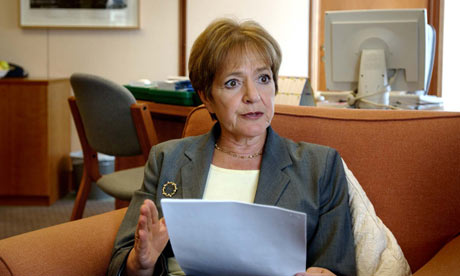 Timeline: Margaret Hodge Row
Tash Shifrin outlines key dates in the row over how the children's minister dealt with reports of child abuse at a London council that surfaced when she was the council's leader
Society Guardian,
Wednesday 19 November 2003
Article history
1982
Margaret Hodge became Labour leader of Islington council.
1985
Demetrious Panton complained to senior figures at Islington council about being abused while in the council's care in the 1970s and early 1980s. He received no official reply until 1989, when the deputy social services director, Anthony Cousins, wrote to say the council regretted what had happened but did not believe it was at fault.
April 1990
Senior social worker Liz Davies and her manager, David Cofie, raised concerns about sexual abuse to one of Islington's neighbourhood forums. They asked for extra staff to help investigate but were turned down. Ms Hodge wrote a memo to the director of social services saying the budget would not allow extra staff. Ms Davies and Mr Cofie continued to raise concerns, sending "about 15 reports to senior managers and the area child protection committee". The committee decided there was no cause for concern.
February 1992
Liz Davies resigned from her job after being ordered to place a seven-year-old boy in a care home run by someone she had raised concerns about. She took her information to Scotland Yard.
1992
Mr Panton raised his case again with Stephen Twigg, then an Islington councillor, and now minister for schools and a colleague of Ms Hodge at the Department for Education and Skills. In 1996 Mr Twigg, who has also worked as Ms Hodge's parliamentary assistant, told the press he wished he had "taken it up in a more active way at the time" and admitted his failure to raise the case with Ms Hodge "may be a criticism of me".
October 6 1992
The Evening Standard began a series of reports alleging that dozens of children at two Islington council homes were abused. Ms Hodge accuses the Standard of "gutter journalism" and rejected its dossier on paedophile activity in the homes.
October 23 1992
Margaret Hodge stepped down as council leader to take a post with consultants PriceWaterhouse.
May 23 1995
An independent inquiry led by the director of Oxford social services, Ian White, found that the council failed to properly investigate the sexual abuse allegations. The inquiry report said it was possible many of the allegations were true and that abusers "are still working in the field elsewhere". Of 32 named staff alleged to be involved in abuse, only four were disciplined. Two remained in post, including one working in childcare. The White report described the way the council was run at the time of the allegations as "disastrous".
June 13 2003
Ms Hodge was appointed children's minister. Her appointment sparked a renewed campaign against her by the Standard, which had been vindicated in its 1992 reports by the 1995 White inquiry. Liz Davies, previously an unnamed whistleblower, went public in her anger at the appointment.
June 30 2003
Ms Hodge rejected calls for her resignation as children's minister. She acknowledged making one "terrible error of judgement" in 1992. But she added: "I think in the context of those times, people will understand why I made that [error of] judgement. I hope they understand that I've learned the lessons from that."
November 11 2003
Ms Hodge tried to block a BBR Radio Four Today programme investigation into the abuse in Islington children's homes. She wrote to the BBC chairman, Gavin Davies, to condemn the programme, accusing it of "deplorable sensationalism" and called Mr Panton, who spoke to the BBC, an "extremely disturbed person". Mr Panton, now a government consultant, said Islington council had repeatedly ignored claims that he had been abused as a child by Bernie Bain, who was head of the children's home where he lived, in 1978. Bain, described by police as a "brutal sexual abuser", has since committed suicide.
November 15 2003
Mr Panton rejected the minister's written apology for her remarks and said they were not genuine. He demanded a public apology, a donation to a children's charity of his choice and payment of his legal costs.
November 19 2003 Margaret Hodge issued a public apology to Mr Panton, read in the high court. Her statement said she was genuinely sorry for labelling him disturbed and accepted the allegation "ought never to have been written".
To view the original article CLICK HERE
To understand the Concept & Service of StolenKids-
where you can help yourself and others at:
where you can help yourself and others at:
StolenKids-
To See The Links Page
CLICK HERE
CLICK HERE
Wednesday, 5 September 2001
P E N D I N G
http://www.telegraph.co.uk/news/uknews/5417283/Social-services-in-Nottingham-claim-mother-is-too-stupid-to-bring-up-child.html
http://www.telegraph.co.uk/comment/personal-view/5419796/The-best-mothers-dont-have-to-be-clever.html
http://www.telegraph.co.uk/news/uknews/5534188/Second-mother-too-supid-to-raise-her-children.html
http://www.telegraph.co.uk/comment/personal-view/5419796/The-best-mothers-dont-have-to-be-clever.html
http://www.telegraph.co.uk/news/uknews/5534188/Second-mother-too-supid-to-raise-her-children.html
Sunday, 3 June 2001
YORKSHIRE POST - 03-Jul-2001 - Martyn LOCKLIN
Blair film man jailed for 15 years
over sex abuse at children’s home
Date: 03 July 2001
A Labour councillor who appeared with Prime Minister Tony Blair in the TV documentary Tony’s People was yesterday jailed for 15 years for sexually abusing three 14-year-old boys.
Martyn Locklin, 41, groomed the youngsters for sex, bribing them with
money, alcohol and cannabis before abusing them, Teesside Crown Court was told.
Locklin, of Ladybower, Newton Aycliffe, Co Durham, was found guilty of two counts of indecent assault against each of two boys.
He was also convicted on one count of buggery, two counts of rape and one of indecent assault against a third boy.
Locklin stared impassively at the jury as the verdicts were delivered.
A not-guilty verdict was recorded midway through the trial on a further charge of indecent assault against the first boy. Judge Peter Fox QC said Locklin was guilty of “a gross breach of trust”.
The offences took place between 1988 and 1996 when the boys, who cannot be identified for legal reasons, were aged between 14 and 15.
Locklin, a Labour councillor in Tony Blair’s constituency of Sedgefield, denied all the charges from the outset.
Prosecutor Jamie Hill told the jury Locklin was a “strong and manipulative character” who met the first boy in 1988 when he worked as a carer at a children’s home.
He said alcohol, cannabis and money were used to buy the silence of the first boy, gain the trust of the second and reward the third.
Locklin was sentenced to 10 years in jail to run concurrently for the buggery and rape charges,five years concurrent for the indecent assaults on the two boys,and five years to run consecutively for the repeated abuse of the third boy.
He was placed on the sex offenders register for life.
Passing sentence, Judge Fox said the consecutive sentence was needed to reflect the seriousness of Locklin’s abuse of power while he was in a position of responsibility as a house parent at the children’s home.
In the Channel 4 documentary Tony’s People Locklin was seen showing the Prime Minister around a nursery school in Newton Aycliffe.
To view the original article CLICK HERE
over sex abuse at children’s home
Date: 03 July 2001
A Labour councillor who appeared with Prime Minister Tony Blair in the TV documentary Tony’s People was yesterday jailed for 15 years for sexually abusing three 14-year-old boys.
Martyn Locklin, 41, groomed the youngsters for sex, bribing them with
money, alcohol and cannabis before abusing them, Teesside Crown Court was told.
Locklin, of Ladybower, Newton Aycliffe, Co Durham, was found guilty of two counts of indecent assault against each of two boys.
He was also convicted on one count of buggery, two counts of rape and one of indecent assault against a third boy.
Locklin stared impassively at the jury as the verdicts were delivered.
A not-guilty verdict was recorded midway through the trial on a further charge of indecent assault against the first boy. Judge Peter Fox QC said Locklin was guilty of “a gross breach of trust”.
The offences took place between 1988 and 1996 when the boys, who cannot be identified for legal reasons, were aged between 14 and 15.
Locklin, a Labour councillor in Tony Blair’s constituency of Sedgefield, denied all the charges from the outset.
Prosecutor Jamie Hill told the jury Locklin was a “strong and manipulative character” who met the first boy in 1988 when he worked as a carer at a children’s home.
He said alcohol, cannabis and money were used to buy the silence of the first boy, gain the trust of the second and reward the third.
Locklin was sentenced to 10 years in jail to run concurrently for the buggery and rape charges,five years concurrent for the indecent assaults on the two boys,and five years to run consecutively for the repeated abuse of the third boy.
He was placed on the sex offenders register for life.
Passing sentence, Judge Fox said the consecutive sentence was needed to reflect the seriousness of Locklin’s abuse of power while he was in a position of responsibility as a house parent at the children’s home.
In the Channel 4 documentary Tony’s People Locklin was seen showing the Prime Minister around a nursery school in Newton Aycliffe.
To view the original article CLICK HERE
To understand the Concept & Service of StolenKids-
where you can help yourself and others at:
where you can help yourself and others at:
StolenKids-
To See The Links Page
CLICK HERE
CLICK HERE
Wednesday, 16 February 2000
"LOST IN CARE" - WATERHOUSE - WALES - 16-Feb-2000
"LOST IN CARE" - WATERHOUSE - WALES - 16-Feb-2000
Lost in care, report of the tribunal of inquiry into the abuse of children in care in the former county council areas of Gwynedd and Clwyd since 1974
Document type: Publication
Author: Department of Health
Published date: 16 February 2000
Primary audience: Professionals
Product number: 0105566608
Gateway reference: 2000
Series number: HC Session 1999-00 201
Pages: 937
Copyright holder: Crown Copyright
To See The Full Report In Browsable Version CLICK HERE

Lost in care, report of the tribunal of inquiry into the abuse of children in care in the former county council areas of Gwynedd and Clwyd since 1974
Document type: Publication
Author: Department of Health
Published date: 16 February 2000
Primary audience: Professionals
Product number: 0105566608
Gateway reference: 2000
Series number: HC Session 1999-00 201
Pages: 937
Copyright holder: Crown Copyright
To See The Full Report In Browsable Version CLICK HERE
To understand the Concept & Service of StolenKids-
where you can help yourself and others at:
where you can help yourself and others at:
StolenKids-
To See The Links Page
CLICK HERE
CLICK HERE
Wednesday, 7 January 1998
BBC - 07-Jan-1998 - Mark TROTTER
UK Council criticised over paedophile scandal
Hackney council: facing criticism
Hackney council: facing criticism
A Labour-run council has been severely criticised by an independent inquiry for its handling of a paedophile scandal.
The author of the report John Barratt voices his criticisms (Dur: 17")
The inquiry, headed by former Cambridgeshire County Council chief executive John Barrett, criticised the way Hackney Council in east London dealt with allegations that one of its social workers, who later died of an Aids-related illness, was abusing children in his care but said there was no political cover-up.
The report revealed widespread incompetence and mismanagement at Hackney in dealing with the Mark Trotter affair but it cleared the council of corruption.
The inquiry centred on allegations that Trotter, a social worker who worked for the authority from 1981 to 1993, abused children in his care.
 Mark Trotter: believed to have abused children in his care
The author of the report John Barratt voices his criticisms (Dur: 17")
The inquiry, headed by former Cambridgeshire County Council chief executive John Barrett, criticised the way Hackney Council in east London dealt with allegations that one of its social workers, who later died of an Aids-related illness, was abusing children in his care but said there was no political cover-up.
The report revealed widespread incompetence and mismanagement at Hackney in dealing with the Mark Trotter affair but it cleared the council of corruption.
The inquiry centred on allegations that Trotter, a social worker who worked for the authority from 1981 to 1993, abused children in his care.
 Mark Trotter: believed to have abused children in his care
He was about to be arrested over allegations of sex abuse when he died of an Aids-related illness in 1995, aged 34.
Trotter is thought to have sexually abused at least twelve children during a fourteen-year career as a social worker in Liverpool and Hackney.
BBC correspondent Andrew Hosken reports (Dur 43")
The report is "highly critical" of the way the council carried out an internal investigation following Trotter's death and its handling of four complaints of sexual abuse of children in Hackney and Liverpool made against Trotter while working for the council.
It said Hackney's handling of these two matters amounted to "impropriety" but ruled out allegations that the Trotter affair had been covered up because he was a Labour activist.
The inquiry was triggered by allegations in the Evening Standard and caused a row within Hackney's ruling Labour group.
Seventeen Labour councillors subsequently resigned, and were later expelled, thus causing the party to lose control of Hackney Council in September 1996.
Hackney chief executive Tony Elliston answers questions about the Mark Trotter affair (2' 15")
Labour no longer has control of Hackney Council but the party's group leader, John McCafferty, said: "I am pleased the independent report has concluded there was no cover up. Hackney Labour was wrongly accused.
"This accusation has been completely rebutted by this independent inquiry."
The Liberal Democrats said while the report was good in places questions must be answered by the Labour Party about its handling of the affair.
It was claimed that Trotter, who was openly gay, had strong links with the then-ruling Labour group and stayed in his job despite being suspected of child abuse.
To view the original CLICK HERE
Trotter is thought to have sexually abused at least twelve children during a fourteen-year career as a social worker in Liverpool and Hackney.
BBC correspondent Andrew Hosken reports (Dur 43")
The report is "highly critical" of the way the council carried out an internal investigation following Trotter's death and its handling of four complaints of sexual abuse of children in Hackney and Liverpool made against Trotter while working for the council.
It said Hackney's handling of these two matters amounted to "impropriety" but ruled out allegations that the Trotter affair had been covered up because he was a Labour activist.
The inquiry was triggered by allegations in the Evening Standard and caused a row within Hackney's ruling Labour group.
Seventeen Labour councillors subsequently resigned, and were later expelled, thus causing the party to lose control of Hackney Council in September 1996.
Hackney chief executive Tony Elliston answers questions about the Mark Trotter affair (2' 15")
Labour no longer has control of Hackney Council but the party's group leader, John McCafferty, said: "I am pleased the independent report has concluded there was no cover up. Hackney Labour was wrongly accused.
"This accusation has been completely rebutted by this independent inquiry."
The Liberal Democrats said while the report was good in places questions must be answered by the Labour Party about its handling of the affair.
It was claimed that Trotter, who was openly gay, had strong links with the then-ruling Labour group and stayed in his job despite being suspected of child abuse.
To view the original CLICK HERE
To understand the Concept & Service of StolenKids-
where you can help yourself and others at:
where you can help yourself and others at:
StolenKids-
To See The Links Page
CLICK HERE
CLICK HERE
Tuesday, 11 November 1997
11-Nov-1997 - INDEPENDENT - A serial sex offender Steven Leisk jailed for life
11-Nov-1997 - INDEPENDENT - A serial sex offender Steven Leisk jailed for life
Sex offender given life for murder
To view the original article CLICK HERE

Sex offender given life for murder
Kathy Marks
Tuesday, 11 November 1997
A serial sex offender was jailed for life yesterday for strangling a schoolboy while under the supervision of a local council.
Steven Leisk, 34, will serve a minimum of 25 years in jail after the judge at the High Court in Aberdeen told him he represented a danger to the public.
Leisk pleaded guilty to the abduction and murder last July of nine-year- old Scott Simpson, whose body was found four days later in the grounds of Aberdeen University. He had been strangled with a scarf.
Scott was playing football with friends in a park near his home in the city when he was approached by Leisk, who gave him a roll-up cigarette and a note that read: "Hi kid. If you want some of the latest megadrive games or any computer games, pounds 5 each, follow me."
The boy showed the note to two girls and told them he would be back in 20 minutes, Colin Boyd QC, prosecuting, told the court. Scott's parents reported him missing that evening, and Grampian police mounted a huge search. Mr Boyd said police failed to find Scott's body the following day despite searching the lane in which it was eventually found.
"Also of concern is the fact that the social work department who were supervising the accused's release on licence were aware that the accused was residing directly opposite the place where Scott was last seen alive," Mr Boyd said. "They took no steps to convey that information to police."
Leisk, who led police to the lane after he was arrested, had four previous convictions for sex offences. He also admitted assaults on two 14-year- old boys earlier this year.
Leisk, who was abused as a child and was an army medical orderly in the Falklands, according to his defence counsel, was arrested after a relative telephoned police. He told detectives that he strangled Scott by mistake while trying to muffle his screams: "I just panicked. I told him to stop the noise."
To view the original article CLICK HERE
'Open the curtains, throw open the windows and permit the light of investigation and fresh air into family courts and sexual, emotional and physical abuse of the vulnerable - expose the abuse & the abuse of authority of those acting in OUR name! No child asked to be or enjoys abuse, it is for the gratification of the inadequate'.
To understand the Concept & Services of Stolen????-
where you can help yourself and others: StolenKids-
4 Those losing kids due to 'authorities' ie Forced Adoption & Care!
Or perhaps more suited to YOUR needs: StolenChildhood-
4 those facing abuse past or present sexual or other!
or StolenTrust-
4 those where or have suffered abuse within a relationship!
or StolenOyster-
4 those who have been abused or raped by a stranger or stalker
To See The Links Page
Subscribe to:
Posts (Atom)